Why the Fear Around AI Sounds Familiar (And Why We’ve Been Here Before)
When computers entered offices, people worried:
- “No one will write by hand anymore.”
- “Spelling skills will decline.”
- “Mental math will disappear.”
- “Real intelligence will fade.”
And yes — handwriting declined.
But thinking didn’t.
In fact, writing exploded.
Emails, blogs, books, research papers, social media — we produce more written thought today than at any point in history.
The tool changed.
Human capability expanded.
AI is today’s version of that moment.
The Real Question Isn’t “Will AI Replace Us?”
The real question is:
Will AI free us — or weaken us?
That depends entirely on how we use it.
AI Replaces Effort. It Does Not Replace Judgment.
Let’s be clear about what AI actually does well:
- Drafting
- Summarizing
- Structuring ideas
- Generating options
- Automating repetitive analysis
What it does not have:
- Wisdom
- Values
- Lived experience
- Accountability
- Context of your life
AI predicts patterns.
Humans assign meaning.
That distinction matters.
We Didn’t Lose Writing. We Lost Friction.
When computers replaced handwriting, we didn’t lose language.
We lost friction.
We removed:
- Rewriting entire pages for small edits
- Manual copying
- Physical filing systems
And that allowed us to:
- Collaborate faster
- Think at scale
- Publish instantly
AI removes cognitive friction.
It allows:
- Faster first drafts
- Faster exploration
- Faster learning
- Faster iteration
The human still chooses the direction.
Why Midlife Professionals Should Be the Most Optimistic
Here’s something rarely said:
AI disproportionately benefits experienced professionals.
Why?
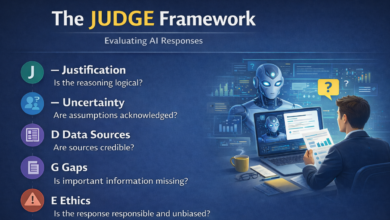
Because AI amplifies judgment.
A 22-year-old with AI gets productivity.
A 55-year-old with AI gets productivity + decades of pattern recognition.
Experience becomes leverage.
AI doesn’t replace wisdom.
It multiplies it.
For the FiftyIsNifty community, that’s powerful.
The Skill That Will Matter Most
In the AI era, the most valuable skill is not typing.
It’s not memorization.
It’s not even speed.
It’s:
- Framing the right questions
- Evaluating outputs
- Applying ethical judgment
- Connecting dots across domains
- Seeing long-term implications
AI gives answers.
Humans must decide which answers matter.
Every Technological Leap Feels Existential
Printing press → “Books will corrupt minds.”
Electricity → “Society will decay.”
Internet → “Human connection will die.”
Smartphones → “Attention is over.”
And yet here we are — more connected, more informed, more capable than any generation before us.
AI is not different in principle.
It is different in speed.
And speed requires adaptation — not panic.
The Responsible Pro-AI Position
Being pro-AI does not mean:
- Blind trust
- Ignoring bias
- Eliminating human oversight
- Automating everything
It means:
- Using AI as augmentation
- Keeping humans in decision loops
- Redefining education around thinking, not memorizing
- Teaching discernment instead of restriction
The Future Is Not Human vs AI
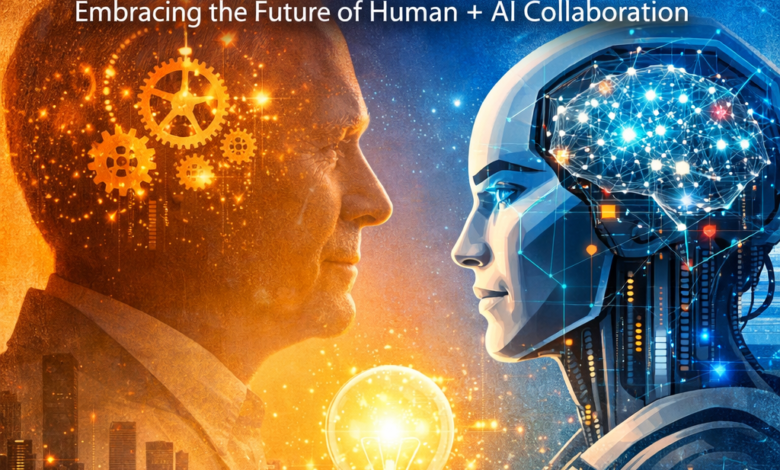
It’s Human + AI vs Human Alone.
Those who refuse AI will not preserve purity.
They will simply compete at a disadvantage.
The winners will be:
- Curious
- Adaptive
- Ethical
- Lifelong learners
Sound familiar? That’s exactly the FiftyIsNifty mindset.
Final Thought
AI does not replace human intelligence.
It replaces inefficiency.
And inefficiency has always been temporary.
The real danger is not that AI will think for us.
The real danger is that we refuse to think about how to use it wisely.
Let’s lead the conversation — not fear it.